
-
 Iqtisodiyot nazariyasi. Siyosiy iqtisod. Makro iqtisodiyot. Mikro iqtisodiyot,
 -
 Iqtisodiyot nazariyasi. Siyosiy iqtisod. Makro iqtisodiyot. Mikro iqtisodiyot,
 -

Glossary Banking and Finance English-Russian Russian-English volume 1
Yakov M.Mirkin, Lubov A. Schvechkova,Iqtisodiyot nazariyasi. Siyosiy iqtisod. Makro iqtisodiyot. Mikro iqtisodiyot, -
 Iqtisodiyot nazariyasi. Siyosiy iqtisod. Makro iqtisodiyot. Mikro iqtisodiyot,
 -
 Iqtisodiyot nazariyasi. Siyosiy iqtisod. Makro iqtisodiyot. Mikro iqtisodiyot,
 -
 Iqtisodiyot nazariyasi. Siyosiy iqtisod. Makro iqtisodiyot. Mikro iqtisodiyot,
 -
 Iqtisodiyot nazariyasi. Siyosiy iqtisod. Makro iqtisodiyot. Mikro iqtisodiyot,
 -
 Iqtisodiyot nazariyasi. Siyosiy iqtisod. Makro iqtisodiyot. Mikro iqtisodiyot,
 -
 Iqtisodiyot nazariyasi. Siyosiy iqtisod. Makro iqtisodiyot. Mikro iqtisodiyot,
 -
Test Bank I to Accompany Economics. Eleventh edition
Campbellr. Mcconnell, Stanleyl. Brue,Iqtisodiyot nazariyasi. Siyosiy iqtisod. Makro iqtisodiyot. Mikro iqtisodiyot, -
 Iqtisodiyot nazariyasi. Siyosiy iqtisod. Makro iqtisodiyot. Mikro iqtisodiyot,
 -
 Iqtisodiyot nazariyasi. Siyosiy iqtisod. Makro iqtisodiyot. Mikro iqtisodiyot,
 -
 Iqtisodiyot nazariyasi. Siyosiy iqtisod. Makro iqtisodiyot. Mikro iqtisodiyot,
 -
 Iqtisodiyot nazariyasi. Siyosiy iqtisod. Makro iqtisodiyot. Mikro iqtisodiyot,
 -
 Iqtisodiyot nazariyasi. Siyosiy iqtisod. Makro iqtisodiyot. Mikro iqtisodiyot,
 -
 Iqtisodiyot nazariyasi. Siyosiy iqtisod. Makro iqtisodiyot. Mikro iqtisodiyot,
 -
 Iqtisodiyot nazariyasi. Siyosiy iqtisod. Makro iqtisodiyot. Mikro iqtisodiyot,
 -
 Iqtisodiyot nazariyasi. Siyosiy iqtisod. Makro iqtisodiyot. Mikro iqtisodiyot,
 -
 Iqtisodiyot nazariyasi. Siyosiy iqtisod. Makro iqtisodiyot. Mikro iqtisodiyot,
 -
 Iqtisodiyot nazariyasi. Siyosiy iqtisod. Makro iqtisodiyot. Mikro iqtisodiyot,
-
Part one Analysis and Statistics
Brian Reid,This year marks the 75th anniversary of the Investment Company Act and the Investment Advisers Act—the key statutes under which mutual funds, exchange-traded funds (ETFs), closed-end funds, and unit investment trusts are regulated and governed. In the same year that Congress enacted these laws, 1940, the fund industry formed the National Committee of Investment Companies, the trade group that became the Investment Company Institute (ICI). Shortly after its formation, ICI began to collect mutual fund asset and flow data, launching a statistical and research program that remains one of the Institute’s core activities and central strengths. This data collection program has expanded greatly over time, with ICI currently managing 18 different fund surveys. Our historical data, some extending back nearly three-quarters of a century, provide perspective about funds and their investors across changing market cycles and an evolving investor base. One of the first projects I worked on when I joined ICI in 1996—a study showing how bond fund investors react during bond market downturns—introduced me to this historical record. At the time, there was an ongoing debate about how fund investors would react to market declines, because fund assets had risen from about $1 billion in 1940 to $3.5 trillion in 1996. Commentators and researchers were concerned that fund investors would leave the markets en masse during a downturn, destabilizing a financial system in which funds were playing a larger role.
-
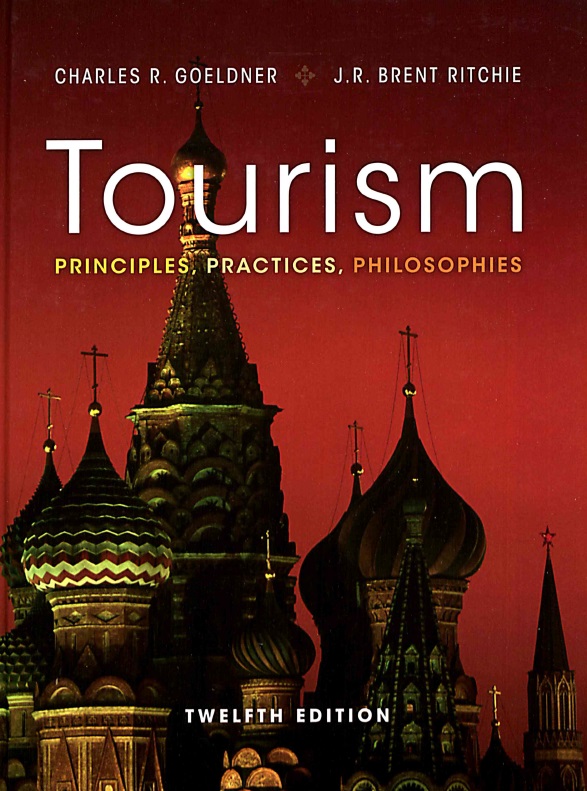
Tourism
Space travel, only a few years ago the dream of a few space pioneers, is now a featured story in the travel sections of leading newspapers. Billionaires write checks for a place in line to go into space while ordinary travelers note the emergence of the megaplane, the Airbus A380, with potential capacity of over 800. Meanwhile Boeing has responded with the smaller, lighter Boeing 787 Dreamliner about to enter commercial service. Most important, tourism planners recognize that technological change, peak oil prices, climate change, and other environmental issues necessitate adaptation if tourism is to thrive. And while tourism planners remain human, just over the horizon they foresee the imminent arrival of nonhuman robots who are about to change the future face of tourism—particularly as it pertains to the provision of routine services and the fulfillment of repetitive tasks required to keep the tourism product functional. The industry must respond to these challenges and opportunities plus deal with options generated by the proliferation of travel blogs and social networking sites such as Facebook, Linkedin, YouTube, Twitter, and MySpace, which change the stream of communication about travel and tourism, -urthermore, security continues to present challenges and added cost. These factors underscore why the globe's most dynamic industry demands constant reassessment. Although basic tourism principles remain, applications must constantly be reevaluated in light of new developments and more challenging economic times. Nevertheless, the world's largest industry, tourism, continues to grow even more as millions of travelers from such booming economies as China, India, Brazil, and Russia seek culture, comfortable climates, and recreation in offshore destinations. At the same time, additional millions of retiring baby boomers from industrialized nations will take advantage of leisure time to enjoy increased travel. All are lured to pack their bags as increasing access to the Internet and television whet appetites to see the modern wonders of the world. The travel industry must respond. Accordingly, Tourism. Twelfth Edition is designed to examine changes and relate them to the basic concepts of tourism. This book is intended to be used primarily as a textbook for college and university courses in tourism. However, the book also provides valuable information and guidance for national/state/ provincial/local tourism offices, convention and visitors bureaus, chambers of commerce, tourism planning and development organizations, tourism promoters, tourist accommodations, attractions and other businesses, transportation carriers, oil and automotive companies, and any other organization that is interested or involved in the movement of people from their homes or businesses to destinations.
-
Glossary Banking and Finance English-Russian Russian-English volume 1
Yakov M.Mirkin, Lubov A. Schvechkova,The Economic Development Institute (EDI) was established by the World Bank in 1955 to train officials concerned with development planning, policymaking, investment analysis, and project implementation in member developing countries. At present the substance of the EDI’s work emphasizes macroeconomic and sectoral economic policy analysis. Through a variety of courses, seminars, and workshops, most of which are given overseas in cooperation with local institutions, the EDI seeks to sharpen analytical skills used in policy analysis and to broaden understanding of the experience of individual countries with economic development. Although the EDI’s publications are designed to support its training activities, many are of interest to a much broader audience. EDI materials, including any findings, interpretations, and conclusions, are entirely those of the authors and should not be attributed in any manner to the World Bank, to its affiliated organizations, or to members of its Board of Executive Directors or the countries they represent. Because of the informality of this series and to make the publication available with the least possible delay, the manuscript has not been edited as fully as would be the case with a more formal document, and the World Bank accepts no responsibility for errors. Shakil Faruqi is principal financial economist in the Economic Development Institute. Институт Экономического Развития /ИЭР/ был основан Мировым Банком в 1955 году для подготовки государственных служащих, занимающихся планированием развития, разработкой политики, анализом инвестиций и реализацией проектов в развивающихся странах, являющихся членами Мирового Банка. В настоящее время основная часть работы ИЭР посвящена анализу макроэкономической политики и политике развития секторов экономики. С помощью различных курсов, теоретических и практических семинаров, проводимых по большей части в странах-участницах Мирового Банка и при непосредственной помощи местного персонала, ИЭР старается усовершенствовать и отточить аналитические навыки, используемые при анализе политики, и расширить понимание опыта отдельных стран в области экономического развития. И, хотя публикации ИЭР в основном предназначены для поддержки его учебной и просветительской деятельности, многие из них представляют интерес для значительно более широких групп общественности. Материалы ИЭР, включая исследования, интерпретации и выводы отражают только авторские взгляды и не могут считаться в какой-либо мере официальной точкой зрения Мирового Банка, его организаций или выражением мнения членов Совета Исполнительных директоров или стран, которые они представляют. Поскольку эта серия не носит официального характера, а также исходя из желания осуществлять издания материалов насколько возможно оперативно, рукопись данной книги не прошла полного редактирования в том объеме, в котором это было бы сделано, если бы издание носило характер более формального документа, Мировой Банк не несет ответственности за возможные ошибки в тексте публикации. Шакил Фаруки является ведущим финансовым экономистом Института Экономического Развития.
-
The business
John Allison, Rachel Appleby, Edward de Chazal,The objective of The Business 2.0 is te hep you learn two things: how to do business in English and the language you need to do it. The new language and structures are presented in the Student's Book whilst the eWorkbook provides language practice and extension.
-
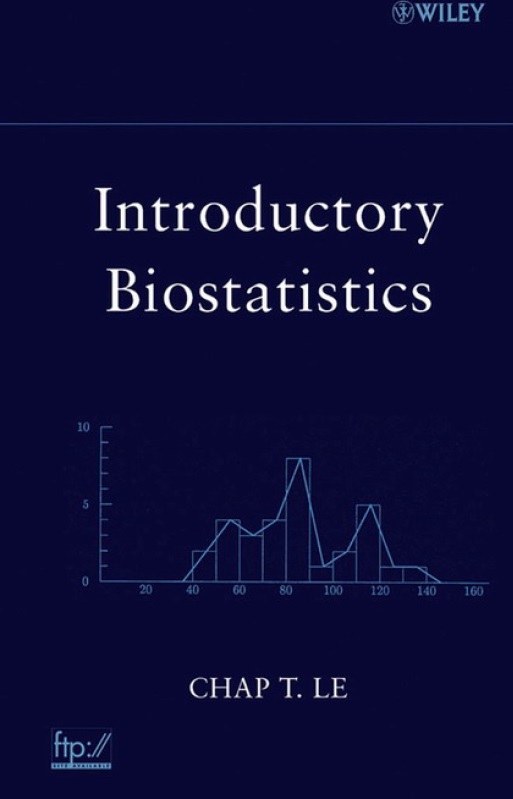
Introductory biostatistics
CHAP T. LE,A course in introductory biostatistics is often required for professional students in public health, dentistry, nursing, and medicine, and for graduate students in nursing and other biomedical sciences, a requirement that is often considered a roadblock, causing anxiety in many quarters. These feelings are expressed in many ways and in many di¤erent settings, but all lead to the same conclusion: that students need help, in the form of a user-friendly and real data-based text, in order to provide enough motivation to learn a subject that is perceived to be and dry. This introductory text is written for professionals and beginning graduate students in human health disciplines who need help to pass and benefit from the basic biostatistics requirement of a one-term course or a fullyear sequence of two courses. Our main objective is to avoid the perception that statistics is just a series of formulas that students need to ‘‘get over with,’’ but to present it as a way of thinking—thinking about ways to gather and analyze data so as to benefit from taking the required course. There is no better way to do that than to base a book on real data, so many real data sets in various fields are provided in the form of examples and exercises as aids to learning how to use statistical procedures, still the nuts and bolts of elementary applied statistics.
-
Economics: Principles, Problems, and Policies. Eleventh edition
Campbell R.McConnell,Economics can be a difficult subject, but this does not have to be the case! Once students realize that every day they make economics decisions and that many current issues involve economic concepts, they will be ready and willing to learn. With careful planning instructors can make the study of economics one of the more valuable and exciting courses in a student`s collegiate experience.
-
Microeconomics
Paul A. Samuelson, William D. Nordhaus,Books are the carriers of civilization. Without books, history is silent, literature dumb, science crippled, thought and speculation at a standstill. They are engines of change, windows on the world, lighthouses erected in a sea of time.
-
Macroeconomics
Paul A. Samuelson and William D.Nordhaus,This book has served as the standard bearer bearer for teaching of elementary economics since the landmark 1948 edition. Each new edition has distilled the deepest thinking of economists about how the economy works and about what society can do to improve people`s living standards
-
Economics. 1
John Sloman,Economics affects all our lives. As consumers we try to make the best our of limited incomes. As workers-or future workers!-we take our place in the job market.
-
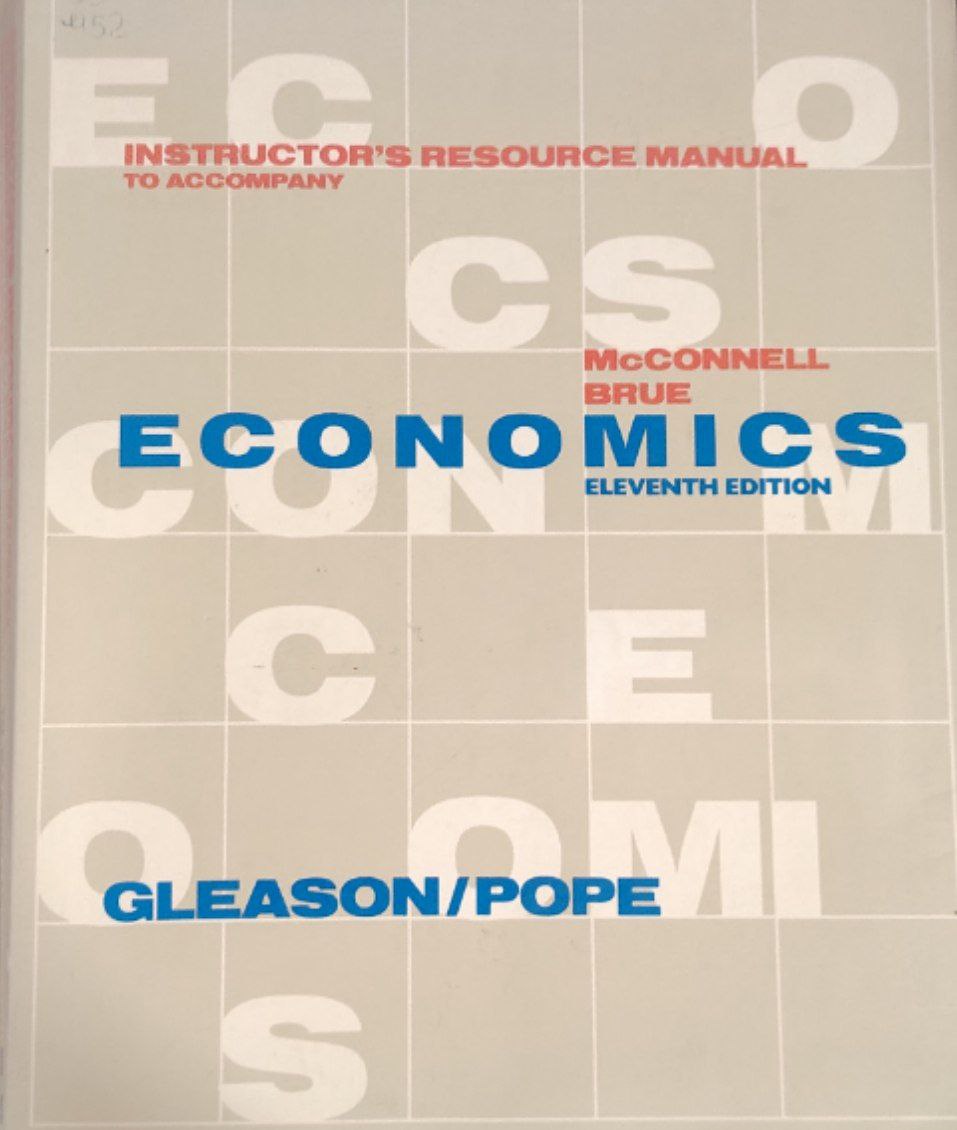
Test Bank I to Accompany Economics. Eleventh edition
Campbellr. Mcconnell, Stanleyl. Brue,Test Bank I contains 3600 multiple- choice and -false questions. We have refined and carried aver approximately 2650 questions from earlier versions that accompanied McConnell`s Economics. We have prepared 950 new questions for this edition.
-
Modern microeconomics Analysis and Applications
David N. Hyman,All rights reserved. The contents or parts thereof may be reproduced for classroom use with Modern Microeconomics: Analysis and Applications. Third Edition by David.N.
-
English For Businessmen 5
Popova, Sheveleva,“English for Businessmen” is a practical guide that provides essential language tools for effective communication in the modern business world, covering key vocabulary, professional expressions, and realistic business situations. It serves as a comprehensive resource for those who need English for meetings, negotiations, presentations, and written communication, offering clear explanations and exercises to build confidence. The book focuses on real-life professional scenarios, giving readers practical vocabulary, useful phrases, and strategies for successful international collaboration. It equips businessmen with the English skills necessary for professional growth through business terminology, sample dialogues, and practice tasks that develop speaking and writing abilities. Overall, “English for Businessmen” is an effective tool for improving business English competence, helping learners master professional etiquette, expand their vocabulary, and handle business correspondence confidently.
-
English For Businessmen 6
Jdanova, Popova, Sheveleva,“English for Businessman” is a practical guide designed to help professionals improve their business communication in English. The book covers essential vocabulary, common phrases, and realistic dialogue situations used in meetings, negotiations, presentations, and business correspondence. With clear explanations and practical exercises, it serves as a useful resource for both beginners and experienced businesspeople looking to boost their confidence and efficiency in international business settings.
-
Economics: Principles, Problems, and Policies
Campbellr. Mcconnell, Stanleyl. Brue,The nature and method of economics An introduction to the economizing problem Pure capitalism and the circular flow Understanding individual markets: demand and supply
-
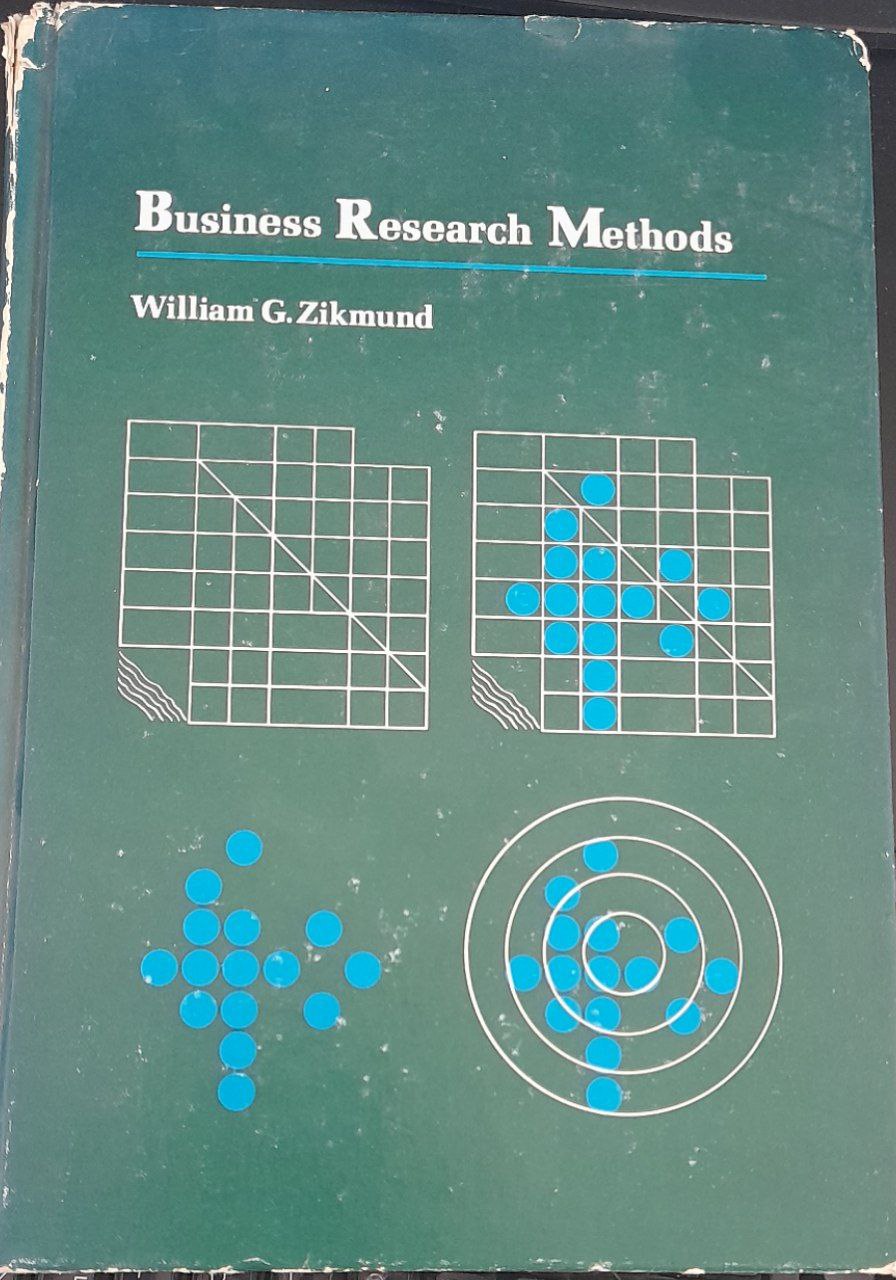
Business Research Methods
Willam G. Zikmund,Вот **краткая аннотация к книге «Business Research Methods»** (наиболее известное издание — Дональда Р. Купера и Памелы Шиндлер). --- ### **Аннотация** «Business Research Methods» — это фундаментальный учебник по методам проведения исследований в сфере бизнеса и менеджмента. Авторы систематически объясняют, как формулировать исследовательскую проблему, выбирать подходящую методологию, собирать данные и интерпретировать результаты. Книга охватывает как **качественные**, так и **количественные методы**, включая: * дизайн исследования; * методы выборки; * опросы и интервью; * наблюдение и эксперимент; * анализ данных, статистику и интерпретацию выводов; * подготовку отчетов и презентацию результатов.
-
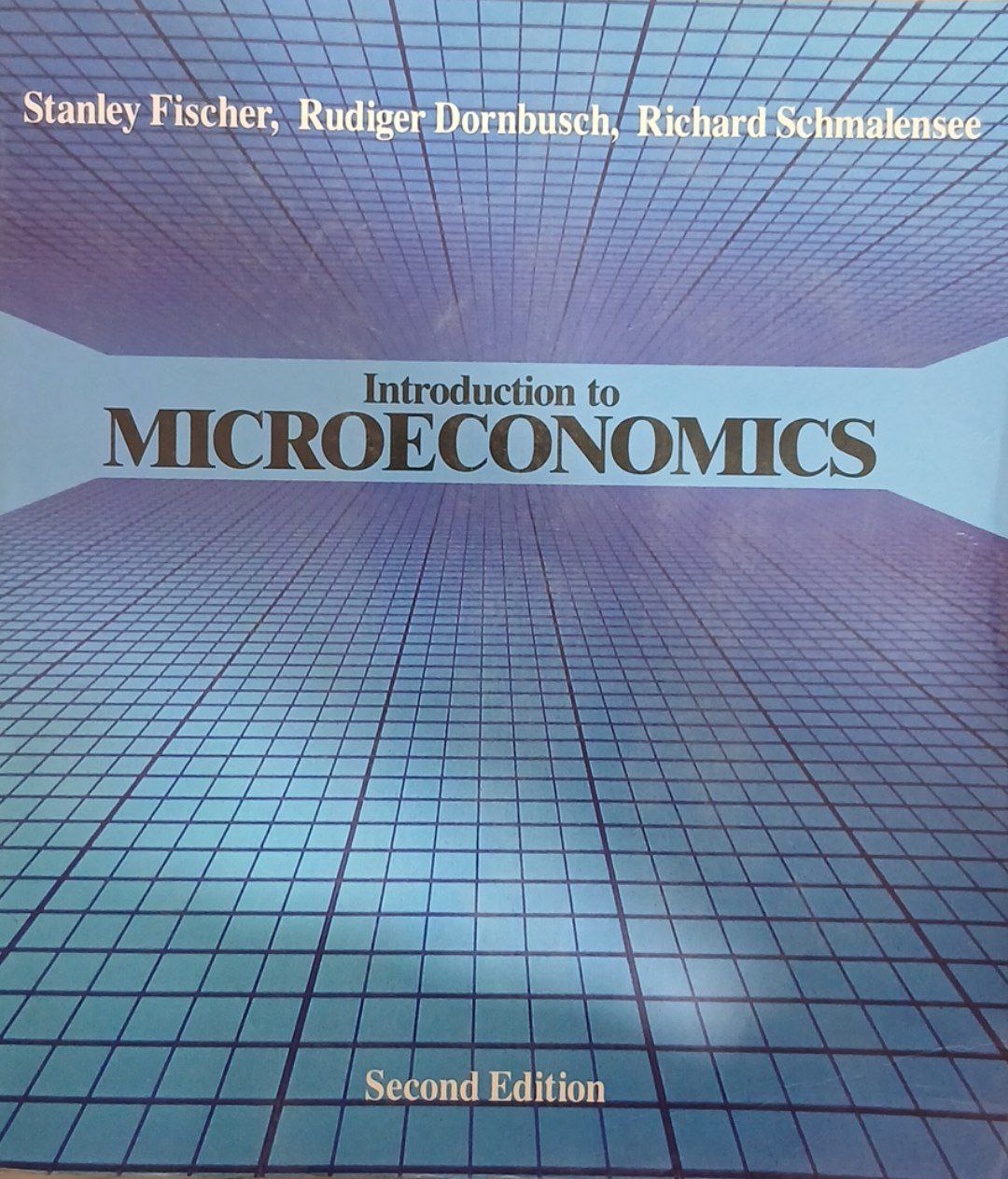
Intruductiuon To Microeconomicas
Stanley Fischer, Rudiger Dornbusch,Introduction to Microeconomics provides a foundational overview of how individuals and firms make economic decisions and interact within markets. The book examines the principles of supply and demand, consumer behavior, production costs, market structures (such as perfect competition, monopoly, and oligopoly), and the role of government in promoting efficiency and equity. It introduces students to the analytical tools economists use to understand how scarce resources are allocated and how prices are determined.
-
Economics
Wilson Clark,conomics by N. Gregory Mankiw provides a comprehensive introduction to the principles that govern how economies function. Divided into microeconomics and macroeconomics, the book explains how individuals, businesses, and governments make decisions about resource allocation, production, and consumption. Mankiw introduces key ideas such as supply and demand, market equilibrium, opportunity cost, inflation, unemployment, and economic growth, using real-world examples to make complex concepts accessible.
-
Business
William , Dennis Middlemist,This book originated with an idea - the conceptualization of the four Cs of business.
-
Economics
Samuelson Paul A., Nordhaus William D.,Founder of the renowned MIT graduate department of economics, was trained at the University of Chicago and Harvard. His many scientific writings brought him world fame at a young age, and in 1970 he was the first American to receive a Nobel Prize in economics. One of those rare scientists who can communicate with the lay public, Professor Samuelson wrote an economics column for Newsweek for many years and was economic adviser to President John F. Kennedy. He testifies often before Congress and serves as academic consultant to the Federal Reserve, the U.S. Treasury, and various private, nonprofit organizations. Professor Samuelson, between researches at MIT and tennis games, is a visiting professor at New York University.
-
Macroeconomics
Campbell, Stanley,Macroeconomics is a textbook intended to give students a comprehensive understanding of how entire economies operate, focusing on large‑scale economic variables such as gross domestic product (GDP), inflation, unemployment, and economic growth. The book explains how these variables interact in both the short run (fluctuations, business cycles) and the long run (economic growth, productivity). It explores the roles of fiscal policy (government spending and taxation) and monetary policy (central bank actions) in stabilizing the economy and addressing issues such as inflation, unemployment, and financial crises. Many editions also include international or “open‑economy” topics (trade, exchange rates), as well as contemporary examples (e.g. recent recessions, global shocks) to help students apply theory to current events.