
-
 Iqtisodiyot nazariyasi. Siyosiy iqtisod. Makro iqtisodiyot. Mikro iqtisodiyot,
 -
 Iqtisodiyot nazariyasi. Siyosiy iqtisod. Makro iqtisodiyot. Mikro iqtisodiyot,
 -
 Iqtisodiyot nazariyasi. Siyosiy iqtisod. Makro iqtisodiyot. Mikro iqtisodiyot,
 -
 Iqtisodiyot nazariyasi. Siyosiy iqtisod. Makro iqtisodiyot. Mikro iqtisodiyot,
 -
 Iqtisodiyot nazariyasi. Siyosiy iqtisod. Makro iqtisodiyot. Mikro iqtisodiyot,
 -
 Iqtisodiyot nazariyasi. Siyosiy iqtisod. Makro iqtisodiyot. Mikro iqtisodiyot,
 -
 Iqtisodiyot nazariyasi. Siyosiy iqtisod. Makro iqtisodiyot. Mikro iqtisodiyot,
 -
 Iqtisodiyot nazariyasi. Siyosiy iqtisod. Makro iqtisodiyot. Mikro iqtisodiyot,
 -
 Iqtisodiyot nazariyasi. Siyosiy iqtisod. Makro iqtisodiyot. Mikro iqtisodiyot,
 -
 Iqtisodiyot nazariyasi. Siyosiy iqtisod. Makro iqtisodiyot. Mikro iqtisodiyot,
 -
Business Without Bosses: How Self-Managing Teams Are Building High- Performing Companies
Charles C. Manz , Henry P. Sims,Iqtisodiyot nazariyasi. Siyosiy iqtisod. Makro iqtisodiyot. Mikro iqtisodiyot, -
 Iqtisodiyot nazariyasi. Siyosiy iqtisod. Makro iqtisodiyot. Mikro iqtisodiyot,
-
Part one Analysis and Statistics
Brian Reid,This year marks the 75th anniversary of the Investment Company Act and the Investment Advisers Act—the key statutes under which mutual funds, exchange-traded funds (ETFs), closed-end funds, and unit investment trusts are regulated and governed. In the same year that Congress enacted these laws, 1940, the fund industry formed the National Committee of Investment Companies, the trade group that became the Investment Company Institute (ICI). Shortly after its formation, ICI began to collect mutual fund asset and flow data, launching a statistical and research program that remains one of the Institute’s core activities and central strengths. This data collection program has expanded greatly over time, with ICI currently managing 18 different fund surveys. Our historical data, some extending back nearly three-quarters of a century, provide perspective about funds and their investors across changing market cycles and an evolving investor base. One of the first projects I worked on when I joined ICI in 1996—a study showing how bond fund investors react during bond market downturns—introduced me to this historical record. At the time, there was an ongoing debate about how fund investors would react to market declines, because fund assets had risen from about $1 billion in 1940 to $3.5 trillion in 1996. Commentators and researchers were concerned that fund investors would leave the markets en masse during a downturn, destabilizing a financial system in which funds were playing a larger role.
-
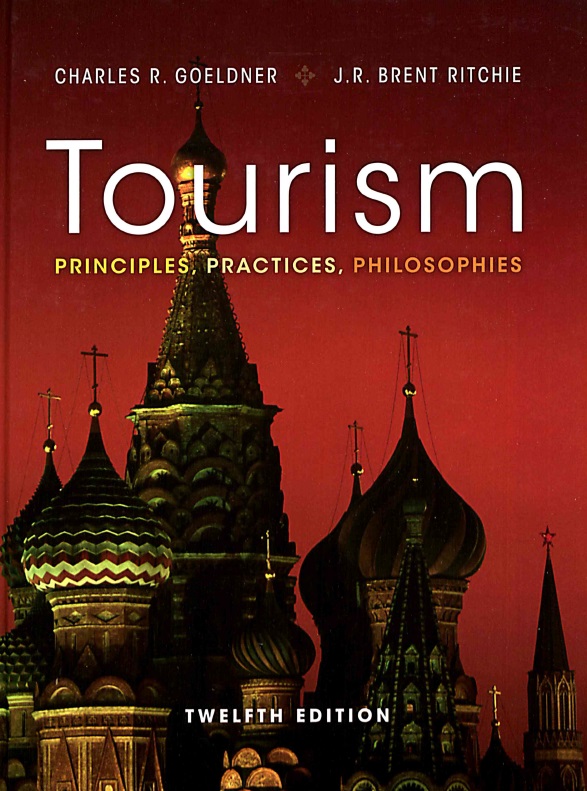
Tourism
Space travel, only a few years ago the dream of a few space pioneers, is now a featured story in the travel sections of leading newspapers. Billionaires write checks for a place in line to go into space while ordinary travelers note the emergence of the megaplane, the Airbus A380, with potential capacity of over 800. Meanwhile Boeing has responded with the smaller, lighter Boeing 787 Dreamliner about to enter commercial service. Most important, tourism planners recognize that technological change, peak oil prices, climate change, and other environmental issues necessitate adaptation if tourism is to thrive. And while tourism planners remain human, just over the horizon they foresee the imminent arrival of nonhuman robots who are about to change the future face of tourism—particularly as it pertains to the provision of routine services and the fulfillment of repetitive tasks required to keep the tourism product functional. The industry must respond to these challenges and opportunities plus deal with options generated by the proliferation of travel blogs and social networking sites such as Facebook, Linkedin, YouTube, Twitter, and MySpace, which change the stream of communication about travel and tourism, -urthermore, security continues to present challenges and added cost. These factors underscore why the globe's most dynamic industry demands constant reassessment. Although basic tourism principles remain, applications must constantly be reevaluated in light of new developments and more challenging economic times. Nevertheless, the world's largest industry, tourism, continues to grow even more as millions of travelers from such booming economies as China, India, Brazil, and Russia seek culture, comfortable climates, and recreation in offshore destinations. At the same time, additional millions of retiring baby boomers from industrialized nations will take advantage of leisure time to enjoy increased travel. All are lured to pack their bags as increasing access to the Internet and television whet appetites to see the modern wonders of the world. The travel industry must respond. Accordingly, Tourism. Twelfth Edition is designed to examine changes and relate them to the basic concepts of tourism. This book is intended to be used primarily as a textbook for college and university courses in tourism. However, the book also provides valuable information and guidance for national/state/ provincial/local tourism offices, convention and visitors bureaus, chambers of commerce, tourism planning and development organizations, tourism promoters, tourist accommodations, attractions and other businesses, transportation carriers, oil and automotive companies, and any other organization that is interested or involved in the movement of people from their homes or businesses to destinations.
-
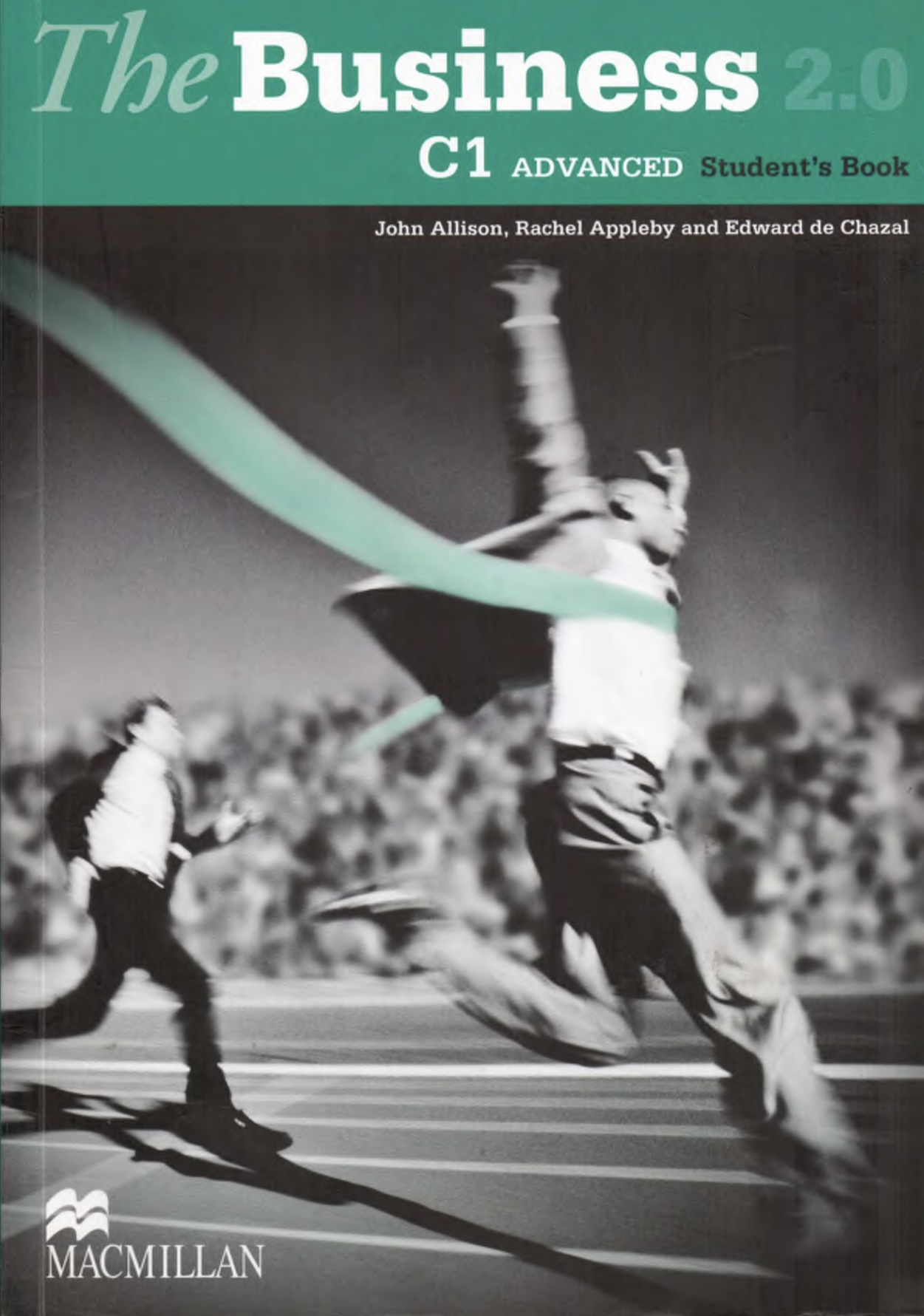
The business
John Allison, Rachel Appleby, Edward de Chazal,The objective of The Business 2.0 is te hep you learn two things: how to do business in English and the language you need to do it. The new language and structures are presented in the Student's Book whilst the eWorkbook provides language practice and extension.
-
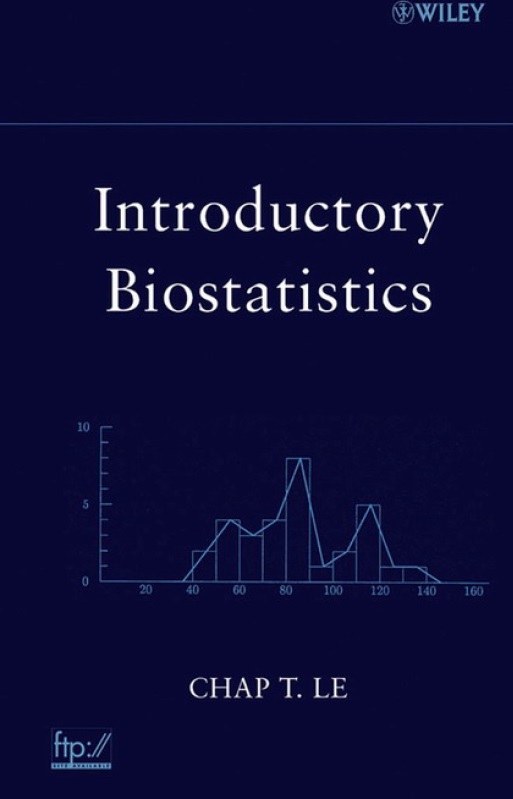
Introductory biostatistics
CHAP T. LE,A course in introductory biostatistics is often required for professional students in public health, dentistry, nursing, and medicine, and for graduate students in nursing and other biomedical sciences, a requirement that is often considered a roadblock, causing anxiety in many quarters. These feelings are expressed in many ways and in many di¤erent settings, but all lead to the same conclusion: that students need help, in the form of a user-friendly and real data-based text, in order to provide enough motivation to learn a subject that is perceived to be and dry. This introductory text is written for professionals and beginning graduate students in human health disciplines who need help to pass and benefit from the basic biostatistics requirement of a one-term course or a fullyear sequence of two courses. Our main objective is to avoid the perception that statistics is just a series of formulas that students need to ‘‘get over with,’’ but to present it as a way of thinking—thinking about ways to gather and analyze data so as to benefit from taking the required course. There is no better way to do that than to base a book on real data, so many real data sets in various fields are provided in the form of examples and exercises as aids to learning how to use statistical procedures, still the nuts and bolts of elementary applied statistics.
-
Economics. 1
John Sloman,Economics affects all our lives. As consumers we try to make the best our of limited incomes. As workers-or future workers!-we take our place in the job market.
-
Modern microeconomics Analysis and Applications
David N. Hyman,All rights reserved. The contents or parts thereof may be reproduced for classroom use with Modern Microeconomics: Analysis and Applications. Third Edition by David.N.
-
English For Businessmen 5
Popova, Sheveleva,“English for Businessmen” is a practical guide that provides essential language tools for effective communication in the modern business world, covering key vocabulary, professional expressions, and realistic business situations. It serves as a comprehensive resource for those who need English for meetings, negotiations, presentations, and written communication, offering clear explanations and exercises to build confidence. The book focuses on real-life professional scenarios, giving readers practical vocabulary, useful phrases, and strategies for successful international collaboration. It equips businessmen with the English skills necessary for professional growth through business terminology, sample dialogues, and practice tasks that develop speaking and writing abilities. Overall, “English for Businessmen” is an effective tool for improving business English competence, helping learners master professional etiquette, expand their vocabulary, and handle business correspondence confidently.
-
English For Businessmen 6
Jdanova, Popova, Sheveleva,“English for Businessman” is a practical guide designed to help professionals improve their business communication in English. The book covers essential vocabulary, common phrases, and realistic dialogue situations used in meetings, negotiations, presentations, and business correspondence. With clear explanations and practical exercises, it serves as a useful resource for both beginners and experienced businesspeople looking to boost their confidence and efficiency in international business settings.
-
Business
William , Dennis Middlemist,This book originated with an idea - the conceptualization of the four Cs of business.
-
Economics
Samuelson Paul A., Nordhaus William D.,Founder of the renowned MIT graduate department of economics, was trained at the University of Chicago and Harvard. His many scientific writings brought him world fame at a young age, and in 1970 he was the first American to receive a Nobel Prize in economics. One of those rare scientists who can communicate with the lay public, Professor Samuelson wrote an economics column for Newsweek for many years and was economic adviser to President John F. Kennedy. He testifies often before Congress and serves as academic consultant to the Federal Reserve, the U.S. Treasury, and various private, nonprofit organizations. Professor Samuelson, between researches at MIT and tennis games, is a visiting professor at New York University.
-
Business Without Bosses: How Self-Managing Teams Are Building High- Performing Companies
Charles C. Manz , Henry P. Sims,This insider's tour shows you how organizations including Texas Instruments, IDS Financial Services, and W. L. Gore & Associates have discarded the old concept of "boss" and flourished with a new and effective team management style. Charles C. Manz, Ph.D. and Henry P. Sims, Jr., Ph.D., the authors of SuperLeadership, use real-world examples of success and failure to guide you through the intricacies of teamwork in a variety of service and manufacturing settings and in all stages of development.
-
Intermediate Microeconomics
Hal R. Varian,W. W. Norton к Company has been independent since its founding in 1923, when William Warder Norton and Mary D. Herter Norton first published lectures delivered at the People's Institute, the adult education division of New York City's Cooper Union. The firm soon expanded its program beyond the Institute, publishing books by celebrated academics from America and abroad. By miel-century. the two major pillars of Norton's publishing program—trade books and college texts—were firmly established. In the 1950s. the Norton family transferred control of the company to its employees, and today—with a staff of four hundred and a comparable number of trade, college, anti professional titles published each year—W. W. Norton к Company stands as the largest anti oldest publishing house owned wholly by its employees.