| To‘liq matnni ko‘chirib olish uchun kutubxonaga a'zo bo‘lish shart | |
|---|---|
| Fayl formati: | |
| Fayl format turi: | application/pdf |
| Fayl hajmi: | 3.46 MB |
| Hujjat turi: | O‘quv qo‘llanma |
| Nashr tili: | Inglizcha |
| Kataloglashtirish manbai: | Inglizcha |
| Hujjat tipi: | Bosma shaklda |
| Kirish huquq turi: | OCHIQ KIRISH |
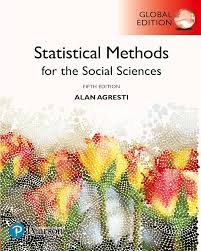
Statistical methods for the social sciences
Kitob mualliflari
Alan Agresti,
Educational research stands at a crossroads that is both methodological and philosophical. The field must decide whether to remain anchored in a toolkit built for small samples and linear assumptions or to integrate approaches suited to high dimensional, complex, and nonlinear data. This commentary argues for methodological bilingualism that combines the strengths of established quantitative, qualitative, and mixed traditions with advances in machine learning and modern causal inference. The commentary reviews literature on learning analytics and AI in education, highlights developments in causal machine learning and model interpretability, and examines the political economy of data that shapes what counts as robust evidence. The commentary ultimately asks whether educational researchers will lead the integration of AI methods in ways that uphold justice and rigor, or whether they will cede authority to corporate actors who define the future of learning on their own terms.
| Bilimlar sohasi: | | Matematika | |
|---|---|
| UDK | 517 |
| Kitob nashriyoti nomi: | Pearson |
| Kitob nashr qilingan shahar: | AQSH |
| ISBN: | 978-0-13-450710-1 |
| Kitob nashr qilingan yili: | 2018 Yil |
| Betlar Soni: | 57 |
Kitobga aloqador kitoblar
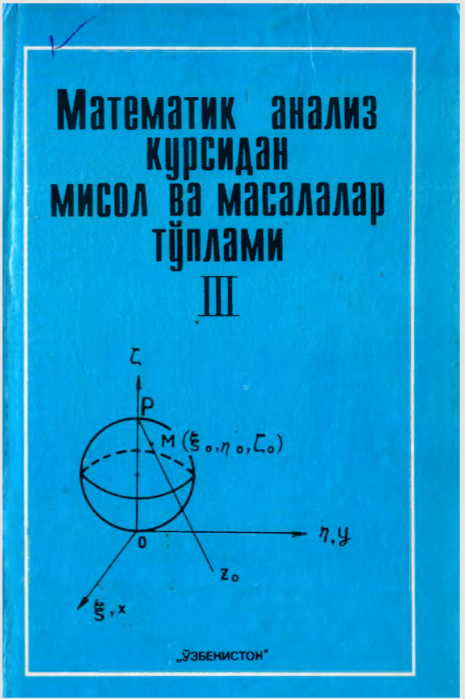
Математик анализ курсидан мисол ва масалалар тўплами III
А.Саъдуллаев,
Г.Худойберганов,
X.Мансуров,
А.Борисов,
Т.Туйчиев,

Математик анализ курсидан мисол ва масалалар тўплами II
А.Саъдуллаев,
Х.Мансуров,
А.Ворисов,
Г.Худойберганов,
Р.Ғуломов,


Sport o'yinlari bo'yicha musobaqalar o'tkazish va hakamlik qilish
D.K.Karimov,
N.Sh.Safarboyev,
SH.N.Tuxtapulatov,