
-
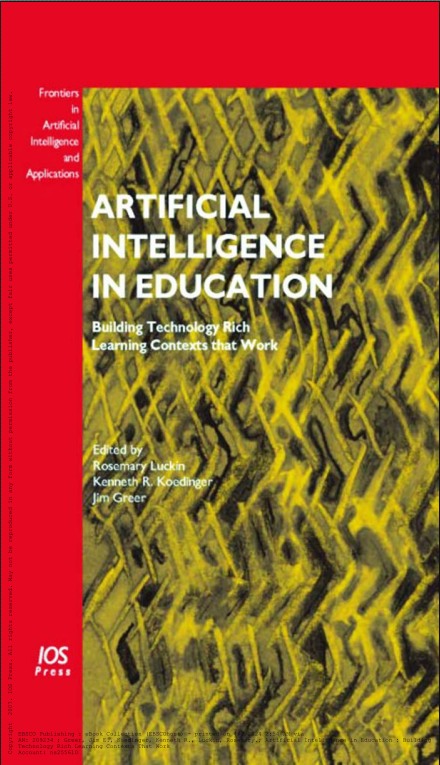
Artificial Intelligence in Education Building Technology Rich Learning Contexts That Work
Rosemary Luckin , Kenneth R. Koedinger , Jim Greer,Ilmiy axborot faoliyati. Informatika, -
A Resource-Aware Framework for Designing Predictable Component-Based Embedded Systems
Aneta Vulgarakis,Ilmiy axborot faoliyati. Informatika, -
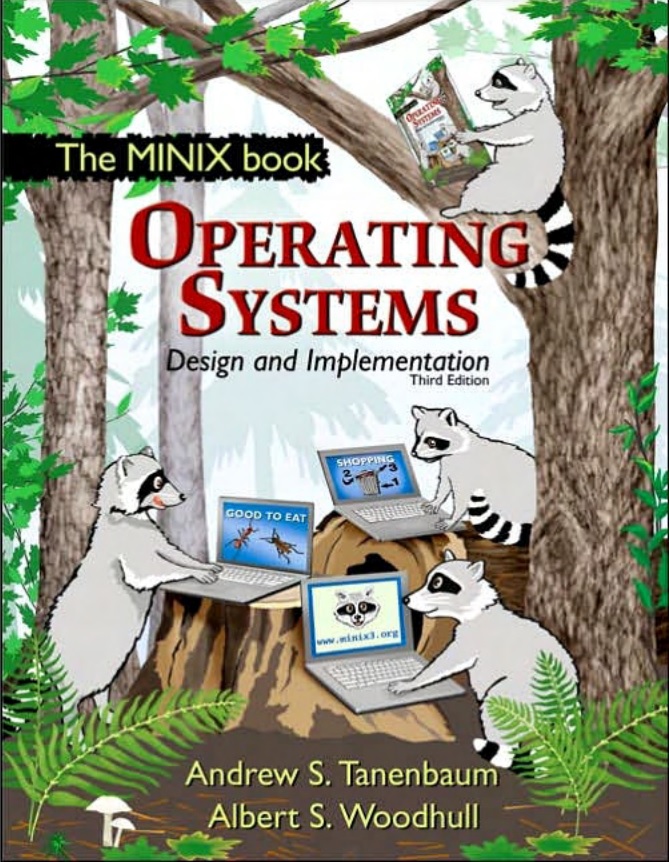
Operating Systems Design and Implementation
Andrew S. Tanenbaum, Albert S. Woodhull,Ilmiy axborot faoliyati. Informatika, -
-
-
 Ilmiy axborot faoliyati. Informatika,
 -

Cognitive Diagnostic Assessment for Education
Jacqueline P. Leighton, Mark J. Gierl,Ilmiy axborot faoliyati. Informatika, -
 Ilmiy axborot faoliyati. Informatika,
 -
 Ilmiy axborot faoliyati. Informatika,
 -
Information Communication Technologies for Human Services Education and Delivery
Jennifer Martin, Linette Hawkins,Ilmiy axborot faoliyati. Informatika, -
 Ilmiy axborot faoliyati. Informatika,
 -
 Ilmiy axborot faoliyati. Informatika,
 -
Converged Multimedia Networks
Hris Gallon , Matthew Bocci , Stuart Walker , Tom Taylor,Ilmiy axborot faoliyati. Informatika, -
-
 Ilmiy axborot faoliyati. Informatika,
 -
 Ilmiy axborot faoliyati. Informatika,
 -
A Toolkit for Creative Teaching in Post-Compulsory Education
Linda Eastwood, Jennie Coates, Liz Dixon, Josie Harvey, Chris Ormondroyd, Sarah Williamson,Ilmiy axborot faoliyati. Informatika, -
Methods and Applications for Advancing Distance Education Technologies
Mahbubur Rahman Syed,Ilmiy axborot faoliyati. Informatika, -
 Ilmiy axborot faoliyati. Informatika,
 -
-
Artificial Intelligence in Education Building Technology Rich Learning Contexts That Work
Rosemary Luckin , Kenneth R. Koedinger , Jim Greer,The 13th International Conference on Artificial Intelligence in Education (AIED-2007) is being held July 9–13, 2007, in Los Angeles, California. AIED Conferences are organized by the International AIED Society on a biennial basis.
-
A Resource-Aware Framework for Designing Predictable Component-Based Embedded Systems
Aneta Vulgarakis,Managing complexity is an increasing challenge in the development of embedded systems (ES). Some of the factors contributing to the increase in complexity are the growing complexity of hardware and software, and the increased pressure to deliver full-featured products with reduced time-to-market. An attractive approach to manage the software complexity, reduce time-to-market and decrease development costs lies in the adoption of component-based development that has been proven as a successful approach in other domains. Another raising challenge, due to complexity increase, in ES, is predictability, i.e., the ability to anticipate the behavior of a system at run-time. The particular predictability requirements of ES call for a development framework equipped with techniques and tools that can be applied to deal with requirements, such as timing, and resource utilization, already at early-stage of development. Modeling and formal analysis play increasingly important roles in achieving predictability, since they can help us to understand how systems function, validate the design and verify some important properties. In this thesis, we present a resource-aware framework for designing predictable component-based ES. The proposed framework consists of (i) the formally specified ProCom component model that takes into account the characteristics of control-intensive ES, and (ii) the resource-aware timed behavioral language - REMES for modeling and reasoning about components' and systems' functional and extrafunctional behavior that includes relevant resource types for ES, associated analysis techniques for various resource-wise properties, and a set of associated tools. To demonstrate the potential application of our framework, we present a number of case studies, out of which one is an industrial research prototype, where ProCom and REMES are applied.
-
Operating Systems Design and Implementation
Andrew S. Tanenbaum, Albert S. Woodhull,Most books on operating systems are strong on theory and weak on practice. This one aims to provide a better balance between the two. It covers all the fundamental principles in great detail, including processes, interprocess communication, semaphores, monitors, message passing, scheduling algorithms, input/output, deadlocks, device drivers, memory management, paging algorithms, file system design, security, and protection mechanisms. But it also discusses one particular system MINIX 3a UNIX-compatible operating system in detail, and even provides a source code listing for study. This arrangement allows the reader not only to learn the principles, but also to see how they are applied in a real operating system.
-
ITIL Version 3
Peter Fanning,Since its creation, ITIL has grown to become the most widely accepted approach to IT Service Management in the world. However, along with this success comes the responsibility to ensure that the guidance keeps pace with a changing global business environment. Service Management requirements are inevitably shaped by the development of technology, revised business models and increasing customer expectations. Our latest version of ITIL has been created in response to these developments. This is one of five core publications describing the IT Service Management practices that make up ITIL. They are the result of a two-year project to review and update the guidance. The number of Service Management professionals around the world who have helped to develop the content of these publications is impressive. Their experience and knowledge have contributed to the content to bring you a consistent set of high-quality guidance. This is supported by the ongoing development of a comprehensive qualifications scheme, along with accredited training and consultancy.
-
ITIL Version 3
Peter Fanning,This publication is one of the five central publications describing the IT Service Management practices that make up ITIL. They are the result of a two-year project to review and update the guidance. The number of Service Management professionals around the world who have helped to develop the content of these publications is impressive. Their experience and knowledge have contributed to the content to bring you a consistent set of high-quality guidance. This is supported by the ongoing development of a comprehensive qualifications scheme, along with accredited training and consultancy.
-
Designing Video and Multimedia for Open and Flexible Learning
Jack Koumi,Whilst television is a powerful medium it is not cheap, as Greville Rumble has demonstrated, nor is learning from the medium automatic – as confi rmed by Tony Bates. The successful production of educational television or video and its integration into a course of study requires an experienced academic and producer, skilled scriptwriter and technician, experienced cameraman and sounder recordist. Such teams are expensive and there are few individuals who possess this combination of experience and skill; Jack Koumi is one of these people. Prior to conducting the Educational TV course at the UK Open University for academics/ producers from around the world he was a senior OU Producer responsible for numerous educational productions. His subsequent consultancy work around the world has given Jack a unique insight into the problems faced by institutions wishing to include TV and video materials into their teaching.
-
Cognitive Diagnostic Assessment for Education
Jacqueline P. Leighton, Mark J. Gierl,Cognitive diagnostic assessment (CDA) is designed to measure specific knowledge structures and processing skills in students so as to provide information about their cognitive strengths and weaknesses. CDA is still in its infancy, but its parentage is fairly well established. In 1989, two seminal chapters in Robert Linn's Educational Measurement signaled both the escalating interest in and the need for cognitive diagnostic assessment. Samuel Messick's chapter, “Validity”, and the late Richard Snow and David Lohman's chapter, “Implications of Cognitive Psychology for Educational Measurement”, helped solidify the courtship of cognitive psychology within educational measurement. The ideas expressed in these chapters attracted many young scholars to educational measurement and persuaded other, well-established scholars to consider the potential of a relatively innovative branch of psychology, namely, cognitive psychology, for informing test development.
-
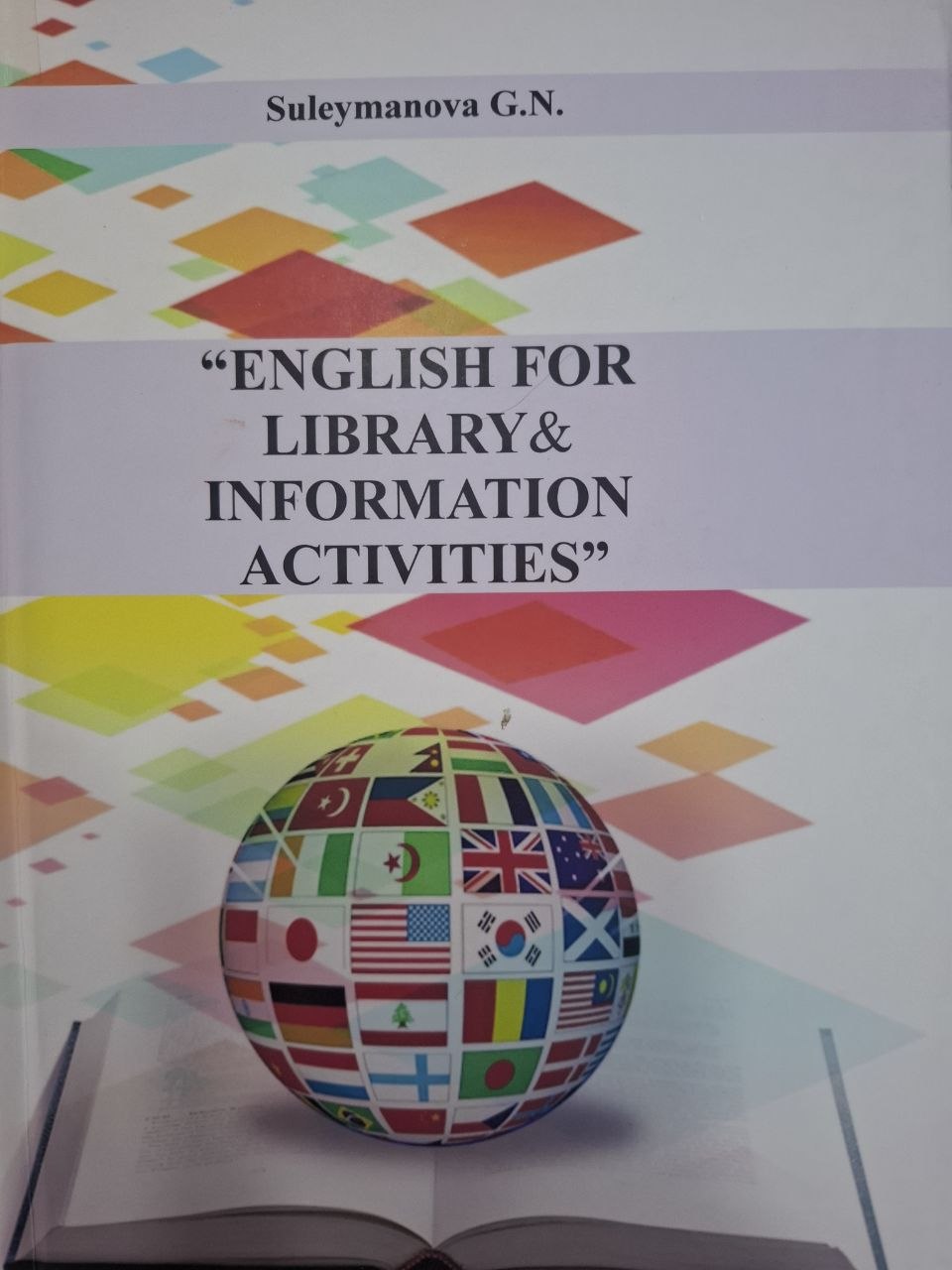
English for library & information activities
Suleymanova, G.N.,This manual is designed for the first-year students of the correspondence department on 5350600 direction of study (Library and information activities) and specialists studying Library Science. The manual consists of 12 lessons which assist to raise students' knowledge to level B2, and each lesson comprises tasks, covering a wide range of current topics taken from different textbooks and the Internet. Each lesson contains work on a mix of language skills: listening, reading, speaking and writing. The lessons comprise texts on specialty, exercises and tasks for developing integrated skills of English, as well as tests for checking gained knowledge. The manual is recommended for students of "Library and information activities" direction of study to develop their skills in listening, reading, speaking and writing according to their specialty. Furthermore, the manual helps to enrich learners' vocabulary.
-
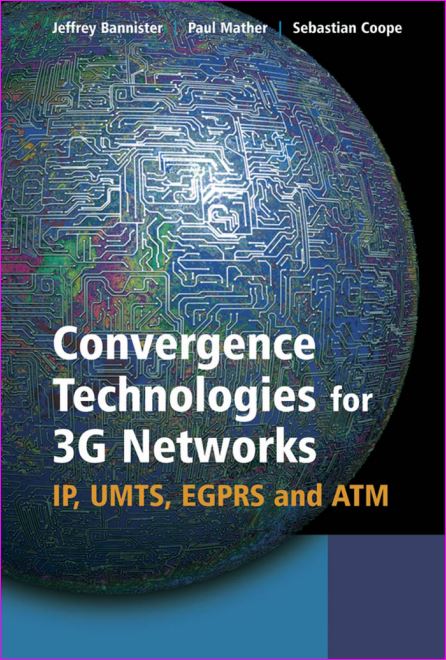
Convergence Technologies for 3G Networks
Jeffrey Bannister,This book is intended to provide detailed and relevant information on the technologies related to the deployment of 3G systems, and focuses on UMTS. It is designed to cover the requisite knowledge to a reader coming from either a telecommunications or a computer networking background, examining how the different technologies are implemented in a UMTS context, and how the system evolves to deliver the service model. Throughout the text, examples of procedures are illustrated using trace files captured from UMTS networks to demonstrate their operation in practice.
-
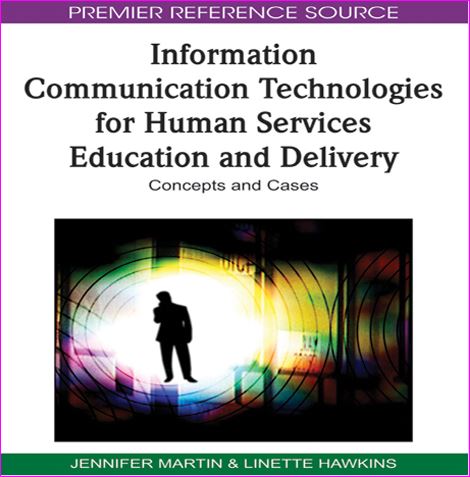
Information Communication Technologies for Human Services Education and Delivery
Jennifer Martin, Linette Hawkins,This book provides relevant theoretical frameworks and the latest empirical research findings in information communication technology. It is written for professionals, educators and students who want to improve their understanding of the strategic role of ICT in improving the human services, with practical instruction on how to apply these technologies. The ideas presented are grounded in evidence based research and practice. All chapters have a theory and practice component with a case study dem-onstrating and discussing the technological applications to either human services education, or practice, or both. The reader not only learns about new technologies but is also equipped with knowledge of the processes and skills required to apply these.
-
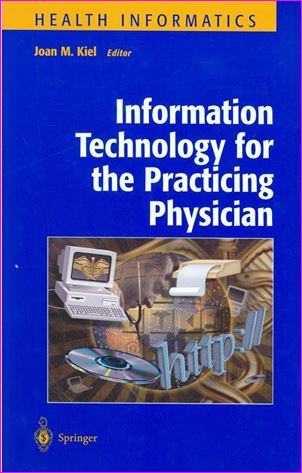
Information Technology for the Practicing Physician
Joan M. Kiel,This book describes the effects of technology on office workflow, patient registration, patient records, prescription writing, patient education, prac-tice finances, credentialing, the management of managed care, messaging, and remote medicine. The first section, “Utilizing Technology to Arrange a Physician Visit,” provides information of the technology utilized before the patient visit and includes examples of physicians who utilize e-mail and Web sites to attract patients, electronic scheduling systems that decrease waiting time, and registration systems that verify insurance information.The second section, “Utilizing Technology to Enhance the Physician Visit,” demon-strates how technology is utilized when the patient is in treatment and/or follow-up care. Focusing on electronic medical records, electronic referral systems, billing and collection systems, and follow-up patient education and discharge information, the section portrays the “future physician office visit.” The third section, “Utilizing Technology to Enhance Physician Prac-tice Operations,” focuses on the physician practic
-
Digital Convergence – Libraries of the Future
John Vince,This book is about libraries. To traditional and new library users the most immediate effect is on access. What is (perhaps glibly) referred to as the “Google generation” has quite different expectations about access to information and quite different assumptions about how research is to be done. Across the spectrum of research – whether academic, commercial, creative or personal – users expect speed and convenience in work, comprehensiveness combined with sensitivity in search engines, and the capacity to manipulate large data sets.
-
Converged Multimedia Networks
Hris Gallon , Matthew Bocci , Stuart Walker , Tom Taylor,This has come about by the determination of some of the MSF contributors to provide a readable and well-referenced account of the essen-tial elements involved in the future Next Generation Network. All the major topics are covered from Call Control, the implementation of Value-added Services, the relation to Mobile/IMS/Wireless technologies and the importance of the MPLS Core. In conclusion, there is a short section on the achievement of Quality of Service and the role of Bandwidth Manager, which, of course, reminds us that the pace of development and innovation in our industry remains undiminished.
-
Computer Networking
Kurose R., Keith Ross,This textbook is for a first course on computer networking. It can be used in both computer science and electrical engeneering departments.
-
Information Communication Technologies for Enhanced Education and Learning
Lawrence Tomei,Many Western nations face a critical shortage of skilled professionals in science, technology, engineering, and mathematics (STEM). However, despite abundant opportunities, few women prepare themselves for careers in these fields. Several of those concerned with the problem have proposed that new media programming, such as television dramas with women engineers, computer professionals, and/or engineers in leading roles, might help attract more women to STEM fields. This paper identifies a theoretical rationale for a media centered strategy, and describes a pilot study whose data suggest that a media-centered approach might have some success in producing greater interest among women in pursuing STEM careers, particularly information technology careers.
-
Integrating Information & Communications Technologies into the Classroom
Lawrence Tomei,Integrating Information & Communications Technologies into the Classroom addresses the multiple perspectives of teaching and learning with technology and promoting research efforts, positions and practices advancing the state-of-the-art application of technology in formal education, corporate training, higher education, professional development and proprietary education. Further, this text focuses on contributions from all disciplines of information, educational and instructional technology. Volume I offers educational researchers, scholars and practitioners with the most current investigations and best practices surrounding the uses of technology in the classroom. The text is divided into four sections. Section I includes eight chapters that examine business, computer science and information technology (IT) education and topics such as school improvement and reform, standards-based technology education programs, data-driven decision making and strategic technology education planning.
-
A Toolkit for Creative Teaching in Post-Compulsory Education
Linda Eastwood, Jennie Coates, Liz Dixon, Josie Harvey, Chris Ormondroyd, Sarah Williamson,The post-compulsory education and training (PCET) sector encompasses a rich and diverse mix of teachers, trainers and learners. The learners include young people and adults; increasingly it also includes learners who are being offered teaching and learning which combines a school, a college and a selected workplace experience. Some learners attend courses because they want to and others because they are required to be there. The subject areas are equally diverse and varied including traditional academic and vocational disciplines, training and professional qualifications and recreational subjects. The courses and qualifications span all levels from pre-entry to degree level and everything in between.
-
Methods and Applications for Advancing Distance Education Technologies
Mahbubur Rahman Syed,This chapter describes a new automatic digital content generation system we have developed. Recently, some universities, including Hosei University, have been offering students opportunities to take distance interactive classes over the Internet from overseas. When such distance lectures are delivered in English to Japanese students, there is a pressing need to provide materials for review after class, such as video content on a CD-ROM or on a Web site. To meet this need, the authors have developed a new automatic content generation system, which enables the complete archiving of lectures including video/audio content, synchronized presentation materials, and handwritten traces on virtual whiteboards. The content is generated in real time and is immediately available at the end of the class. In addition, this system incorporates a unique video search algorithm which adopts a phonetic-based search technology. This enables quick review of the video content by typed-in keywords. The system can automatically create a vast amount of digital content and provide students with an efficient learning tool.
-
Strategic applications of distance learning technologies
Mahbubur Rahman Syed,Chapter I discusses a new generation of e-learning development, based on synchronous groupware applications integration, providing improved interactivity and pro-human relations, allows richer training experiences far beyond a virtual classroom. Despite WWW service evolution, e-conferencing multimedia applications remain “killer applications” and insensitive to resources degradation, in fact, the quality of service (QoS) provided by the network is still a limitation impairing their performance. Such applications have found in multicast technology an ally contributing for their efficient implementation and scalability. Additionally, considering QoS as design goal at application level becomes crucial for groupware development, enabling QoS proactivity to applications. Congregating these technological contributions, an adaptive platform has been developed integrating public domain multicast tools, applied to a Web-based distance learning system. The system is user-centered (e-student), aiming at good pedagogical practices and proactive usability for multimedia and network resources. The services provided, including QoS adapted interactive multimedia multicast conferences (MMC), are fully integrated and transparent to end-users. QoS adaptation, when treated systematically in tolerant real-time applications, denotes advantages in group scalability and QoS sustainability in heterogeneous and unpredictable environments such as the Internet.
-
Management of technology
This paper addresses the question of how enterprises can improve their competitiveness through the acquisition and development of technology, and hence how countries are able to raise the level of industrial development and grow their GDP. It takes the example of East Asia to demonstrate how fast economic growth can be achieved through the "stages" approach to technology acquisition and development. It also provides some case studies of technology transfer to China as a means of illustrating how successful transfer can be achieved and the problems that can be encountered. Finally, some comparisons are made with, and among, the Arab countries and an attempt is made to draw some lessons for the development of the Arab world from experiences gained elsewhere.